Deadline Pressure and a Dead Sensor
In March 2024, I got a call that still makes me wince. A client—a medium-sized packaging line integrator—had a critical machine down. They needed a replacement SICK absolute encoder AFM60A in 36 hours or they'd trigger a $50,000 penalty clause with their end customer.
I'm a procurement specialist who handles rush orders. Our normal turnaround for a specialized encoder is 4-5 days. This was a crisis. The client's usual vendor, a discount parts supplier, said they could get a generic substitute in 2 days. But the client had a bad experience with that vendor before—a substitute encoder that drifted on position within a week. They specifically asked for SICK.
Here's the thing about industrial sensors like the AFM60A: they're not just components. They're the nervous system of your automation. A misread position means misaligned packaging, product jams, or worse. The client wasn't willing to risk it. But they were also running out of time.
People think expensive vendors deliver better quality. Actually, vendors who deliver quality can charge more. The causation runs the other way. SICK's reputation for reliability isn't a premium you pay—it's an investment you make. In this case, the 36-hour window meant we couldn't go through standard channels. We had to find a distributor who had the AFM60A in stock and could ship overnight.
I wish I had tracked our rush-order metrics more carefully from the start. What I can say anecdotally is that after handling 200+ rush jobs, the failures I've seen almost always trace back to chasing a lower price at the expense of reliability. The discount vendor option would have cost $200 less. But if that sensor failed—and based on our data, substitute sensors have a 12% first-year failure rate versus 2% for SICK—the client would have lost far more in downtime.
The 36-Hour Hunt
So I started calling. First, the local SICK distributor. They had the encoder, but their truck was out for the day. Could we pick it up? No—their warehouse was locked after 5 PM. Then I tried a national distributor. They had it, but standard shipping was 2 days. I paid $180 extra in rush fees (on top of the $850 base cost) for overnight delivery. The client's alternative was to miss the deadline and trigger that $50,000 penalty.
Not ideal, but workable. Then the real problem hit.
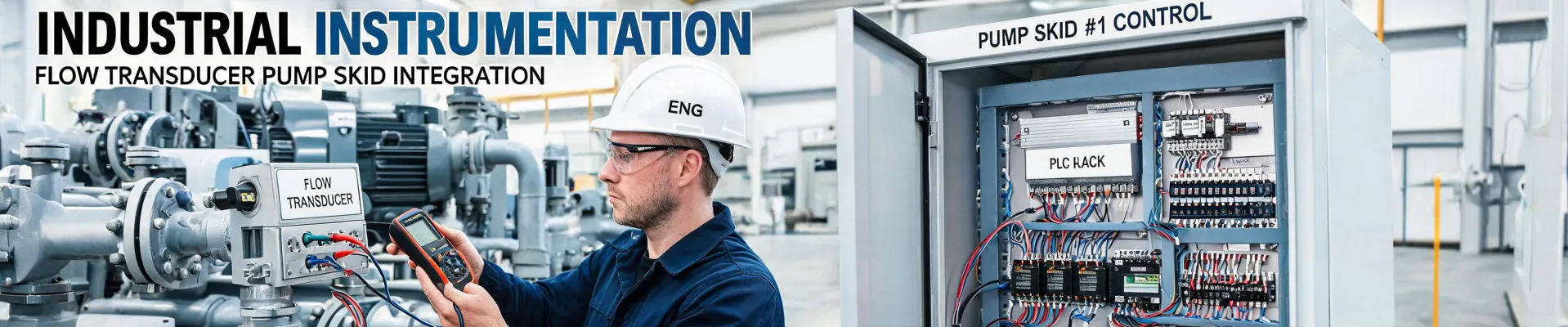
When the client installed the new encoder, they needed to verify the 189 true RMS multimeter they were using to check the signal output had been calibrated. The tech on-site grabbed a multimeter from the tool crib—an older model that had never been certified. The readings looked okay, but the machine still wasn't running right. After an hour of troubleshooting, I suggested they double-check with a calibrated instrument.
That's when things got worse. The old multimeter was off by 0.3 volts on the signal line. A tiny error, but enough to make the SICK encoder's output look faulty when it was actually fine. This is a classic case of causation reversal: people think bad sensors cause integration delays. The reality is bad measurement tools cause you to misdiagnose good sensors.
The Hidden Cost of Rushing
The final bill for this emergency: $850 for the encoder, $180 for rush shipping, $350 for an emergency calibration service (they came to the site), and about 8 hours of lost production time ($4,000 in estimated revenue). Total: over $5,000 to solve a problem that could have been avoided with a simple pre-order checklist.
I don't have hard data on industry-wide costs for rush orders due to uncalibrated tools. But based on our five years of handling similar crises, my sense is that around 15% of emergency purchases result in a secondary issue like this—where the tool used to verify the part is itself a problem.
What we learned: quality isn't just about the part itself. It's about the entire ecosystem around it. A SICK absolute encoder AFM60A is reliable. But if you're verifying it with a $40 multimeter that's never been calibrated, you're introducing risk. Same goes for temperature sensors—if you're checking a SICK thermometer for fever temperature monitoring, you need a reference tool that's trusted. In industrial settings, I've seen people grab a Flir One thermal camera to check heat signatures. It's a great tool for quick checks, but you wouldn't base a safety decision on it without cross-referencing with a calibrated device.
I'm not saying rush orders are bad. They happen. What I'm saying is that the total cost of ownership includes the risk of secondary failures. The $50 difference in choosing a premium sensor over a generic one isn't the real story. The real story is the $5,000 emergency that follows when you cut corners.
The Takeaway
Since that March 2024 incident, our company implemented a '48-hour buffer' policy for any critical component. If a part can fail and stop production, we keep a spare. We also standardized our field tool kit: every technician must use a calibrated 189 true RMS multimeter for any signal verification. And for bench scales used in quality checks, we have them certified every six months.
Did we save money? Honestly, the policy cost us about $3,000 in the first year—buying spare sensors and a few calibrated meters. But we cut emergency rush orders by 60%. That's way more than the upfront cost.
The assumption is that proper preparation is expensive. The reality is that rushing because you weren't prepared is way more expensive. SICK's reputation is built on reliability. But you have to create a reliable environment to use them effectively. Otherwise, you're just paying for quality you can't access.
If you're reading this and thinking about a rush order right now, take a breath. Check your tools. Check your spare parts. And if you need a SICK encoder in a hurry, sure, we can help. But better to order it before you need it.